
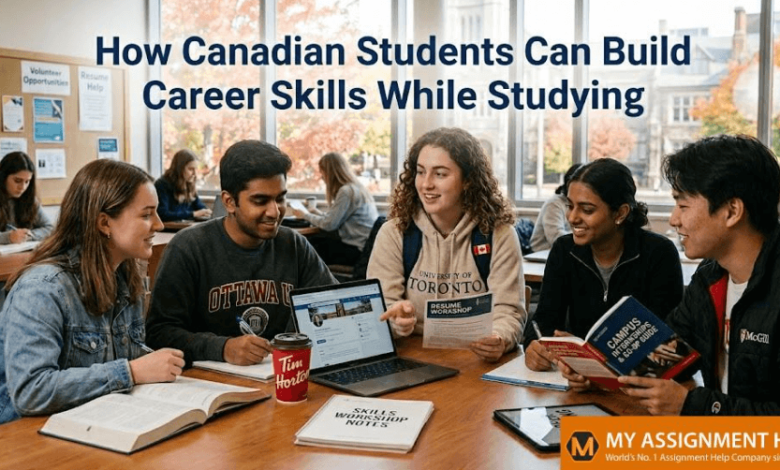
The transition from a Canadian lecture hall to the professional workforce has never been more competitive. For students in Toronto, Vancouver, Montreal, and across the provinces, the 2026-2027 academic cycle presents a unique challenge: a shifting economy influenced by rapid automation and a high demand for specialized “human-centric” soft skills.
Earning a degree or diploma is a significant milestone, but it is no longer the sole ticket to career success. To stand out in the Canadian job market, students must treat their time in school as a dual-track experience—simultaneously mastering academic theory while building a robust portfolio of career-ready skills. When the pressure of these dual tracks becomes overwhelming, many students choose to pay someone to do my assignment to free up time for high-impact networking and internships.
This guide explores the strategic steps you can take to bridge the gap between graduation and employment.
1. Mastering the “Canadian Core” Competencies
Before exploring specific activities, it’s important to first understand the skills Canadian employers value most in today’s job market. While technical expertise differs across industries—for instance, healthcare students often turn to specialized nursing assignment help to better handle complex clinical documentation—there are several core competencies that remain in demand across all sectors. These include strong communication, critical thinking, adaptability, teamwork, and problem-solving abilities, which employers consistently prioritize regardless of the role or field.
- Digital Literacy & AI Fluency: In 2026, understanding how to ethically and efficiently use generative AI tools to enhance productivity is a baseline requirement. Employers want to see that you can use technology to augment your creativity, not replace it.
- Intercultural Communication: Canada’s strength lies in its diversity. The ability to collaborate across different cultural perspectives is vital for the modern, globalized Canadian office, especially in multi-hub cities like Toronto and Montreal.
- Critical Thinking and Problem-Solving: Moving beyond rote memorization to apply logic to complex, real-world scenarios is what separates a student from a strategist.
- Self-Management: With the rise of hybrid work in cities like Calgary and Ottawa, the ability to prioritize tasks and meet deadlines without constant supervision is a top-tier skill.
2. Leveraging Co-op Programs and Work-Integrated Learning (WIL)
Canada is a global leader in Work-Integrated Learning (WIL). Programs like the University of Waterloo’s renowned Co-op or the applied learning models at Seneca Polytechnic are designed specifically to bridge the gap between classroom and cubicle.
The Benefits of Co-op
Co-op programs allow you to alternate academic terms with full-time, paid employment. This provides:
- Practical Application: You see how theoretical concepts function in a business setting.
- Networking: You build a “hidden” network of mentors and colleagues before graduation.
- Resume Authority: You graduate with 12 to 20 months of relevant experience, often putting you ahead of those with higher degrees but no field time.
Beyond the Traditional Co-op
If your program doesn’t offer a formal co-op, look for Practicums or Field Placements. Additionally, the Canada Summer Jobs program provides thousands of subsidized roles every year specifically for youth aged 15-30. For those interested in public service, the Federal Student Work Experience Program (FSWEP) offers a direct path into the Canadian government.
For high school students, engaging in the Specialist High Skills Major (SHSM) program or tracking Mandatory Volunteer Hours with a focus on professional environments can provide an early competitive edge before even hitting university.
3. The Power of On-Campus Involvement
Student unions, clubs, and academic societies function like mini-corporations. These environments allow for “safe failure,” where you can test leadership styles without corporate stakes.
- Executive Roles: Serving as a Treasurer teaches financial management. A Marketing Director role provides experience in social media management and digital analytics.
- Project Management: Organizing a campus event requires logistics and vendor management—the exact skills required for “Agile” roles in the tech sector.
- Research Assistantships: Working under a professor provides hands-on experience with data analysis and technical writing.
4. Maximizing Part-Time Employment
Many students view retail or hospitality jobs as “just a paycheck.” However, these roles are fertile ground for developing transferable skills.
| Role Type | Primary Skill Gained | Professional Application |
| Customer Service/Retail | Conflict Resolution | Managing difficult stakeholders in corporate settings. |
| Tutoring/Support | Communication | Simplifying complex information for clients or teams. |
| Administration/Office | Organization | Mastery of CRM tools and professional scheduling. |
| Hospitality/Service | Multitasking | Managing high-pressure environments and rapid delivery. |
If you find that your part-time job is taking too much time away from your studies, consider utilizing academic support resources to help manage your workload. Balancing a job and a full course load is an exercise in time management—a skill that 90% of HR managers cite as a top priority for new hires.
5. Upskilling Through Digital Certifications
In 2026, the shelf life of technical skills is shorter than ever. Micro-credentials allow you to specialize and show initiative.
- SEO and Content Strategy: Essential for anyone entering marketing or communications.
- Data Analytics (Python/SQL): Increasingly valuable for business and science.
- Project Management (CAPM): A globally recognized certification proving you can lead a team.
6. Developing a “Future-Proof” Productivity System
To build skills while studying, you must become a master of your own time. Adopt evidence-based techniques used by top professionals:
- Deep Work: The ability to focus without distraction on a cognitively demanding task. In a world of notifications, 90-minute blocks of focus are a “superpower.”
- The Pomodoro Technique: Break your work into 25-minute intervals followed by a 5-minute break. This prevents burnout.
- Active Recall: When learning a new skill—whether it’s coding or a language—test yourself instead of just reading. This strengthens neural pathways.
7. Networking Within the Canadian Context
In Canada, the “Informational Interview” is a powerful tool. This is a 15-to-20-minute conversation with a professional to learn about their career path.
- LinkedIn Strategy: Reach out to alumni from your school working in your dream industry.
- Local Meetups: Cities like Calgary, Halifax, and Ottawa have thriving tech communities. Attend mixers to practice your “elevator pitch.”
- Volunteering: Organizations like Volunteer Canada offer opportunities to use your skills for a good cause while meeting community leaders.
8. Managing the Work-Life-Study Balance
The biggest barrier to skill-building is burnout. Professional maturity involves knowing when to lean on support systems to maintain your Academic Strategy.
- Use an Inverted Pyramid Approach: Tackle the most difficult, skill-heavy tasks in the morning when your cognitive load is highest.
- Schedule “White Space”: Blocks of time with nothing planned to allow for creativity and prevent fatigue.
- Seek Help When Needed: Whether it’s mental health support or professional academic guidance to get through a difficult semester, asking for help is a sign of leadership.
See also: Smooth Transitions: Setting New Hires Up for Success from Day One
Frequently Asked Questions
Q.1 How many hours a week should I spend on skill-building?
A: Aim for 3–5 hours. Consistency is more important than intensity. Even one hour of focused coding or writing a week adds up over a four-year degree.
Q.2 Can international students in Canada build career skills?
A: Absolutely. International students often have work permits for off-campus work. Building a local network is crucial for those hoping to apply for Permanent Residency (PR) through Express Entry later.
Q.3 Is it better to have a high GPA or more work experience?
A: The ideal is a balance. Most employers look for a “threshold” GPA (usually a B average) combined with tangible evidence of skills, such as a portfolio or internship.
Q.4 What is the best way to mention “AI Fluency” on a resume?
A: Don’t just list “AI.” Describe a project where you used it, such as: “Utilized Large Language Models to streamline data categorization, reducing processing time by 30%.”
Conclusion: Starting Today
Building career skills is not a task for your final semester—it is a journey that begins on day one. By integrating work-integrated learning, on-campus leadership, and digital certifications into your routine, you transform yourself from a student into a highly employable professional.
The Canadian job market of 2027 will reward those who are adaptable, tech-literate, and proactive. Use the resources available to you, manage your time with precision, and remember that every small effort today is a significant investment in your future. For more tips on navigating your 2026-2027 academic year, keep exploring our student success guides.
About the Author Drake Miller
I am a passionate blog author and associated with Myassignmenthelp.com , dedicated to guiding students toward academic excellence. With a strong focus on simplifying complex concepts, I create insightful content that supports learners across diverse subjects. My goal is to empower students with practical knowledge, effective study strategies, and reliable academic assistance to help them achieve better results and build confidence in their educational journey.

